

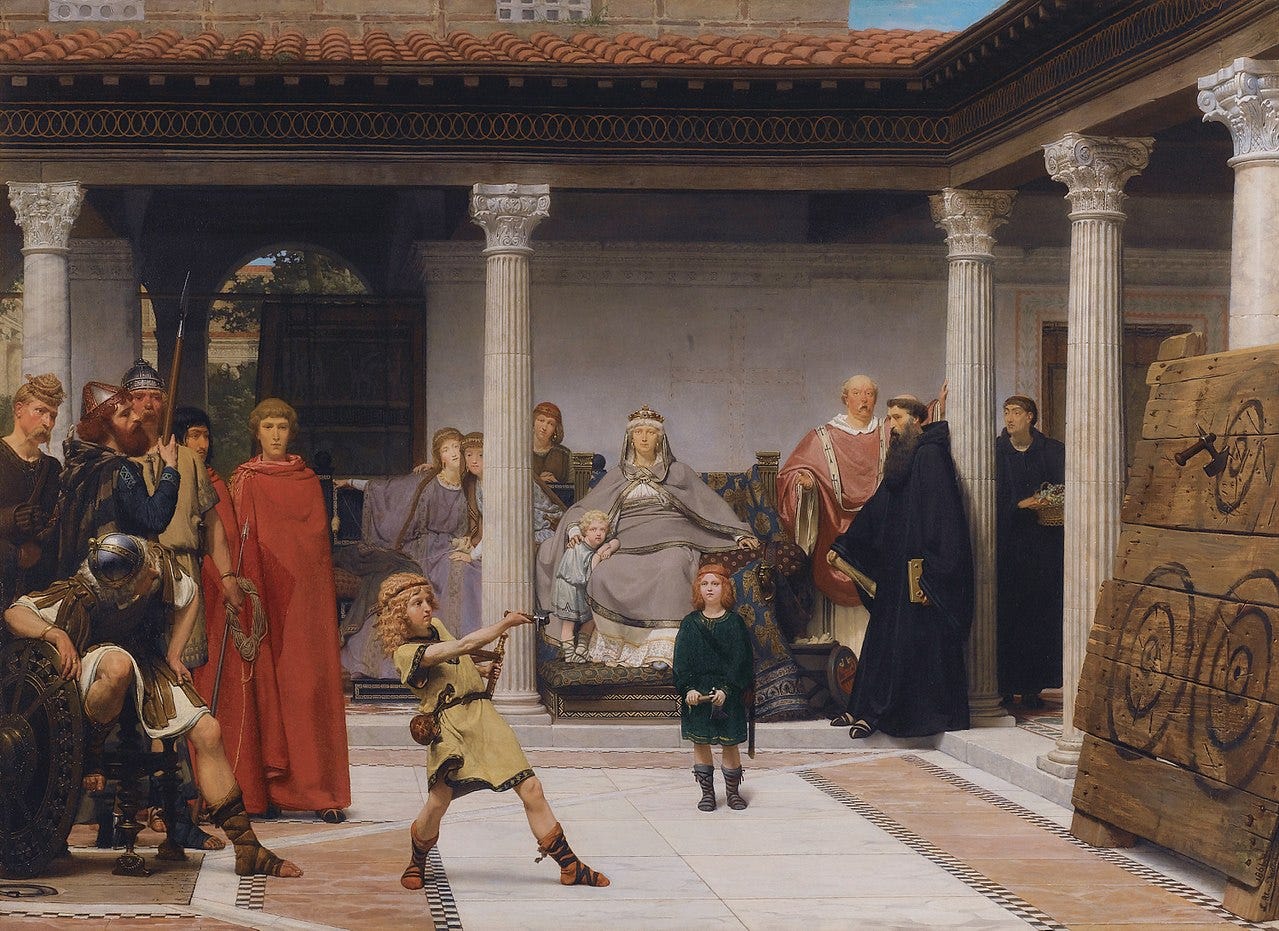
Modern man often treats civilization as an abstract construct — an accumulation of ideas, institutions, and traditions dissolving into a vague ideal. But you cannot afford that abstraction. Civilization is not “out there” somewhere. It begins in your home, with your loyalties, your habits, your marriage, your children. It ultimately rests on a single, irreducible unit: your family.
The family is the microcosm of civilization itself since it is the first community, the first school of virtue, the first church, and the first arena of governance. And whether you realize it or not, your household is already shaping the next generation’s moral imagination. From the Roman paterfamilias to the Biblical household and the Scholastic synthesis of St Thomas Aquinas, philosophers and political theorists have long recognized the family as the foundation upon which the entire social order rests.
To weaken the family is to weaken the very foundation of civilization — and if you neglect your own, you participate in that weakening. History confirms this truth: the collapse of the household consistently precedes and precipitates the collapse of the civilization built upon it.
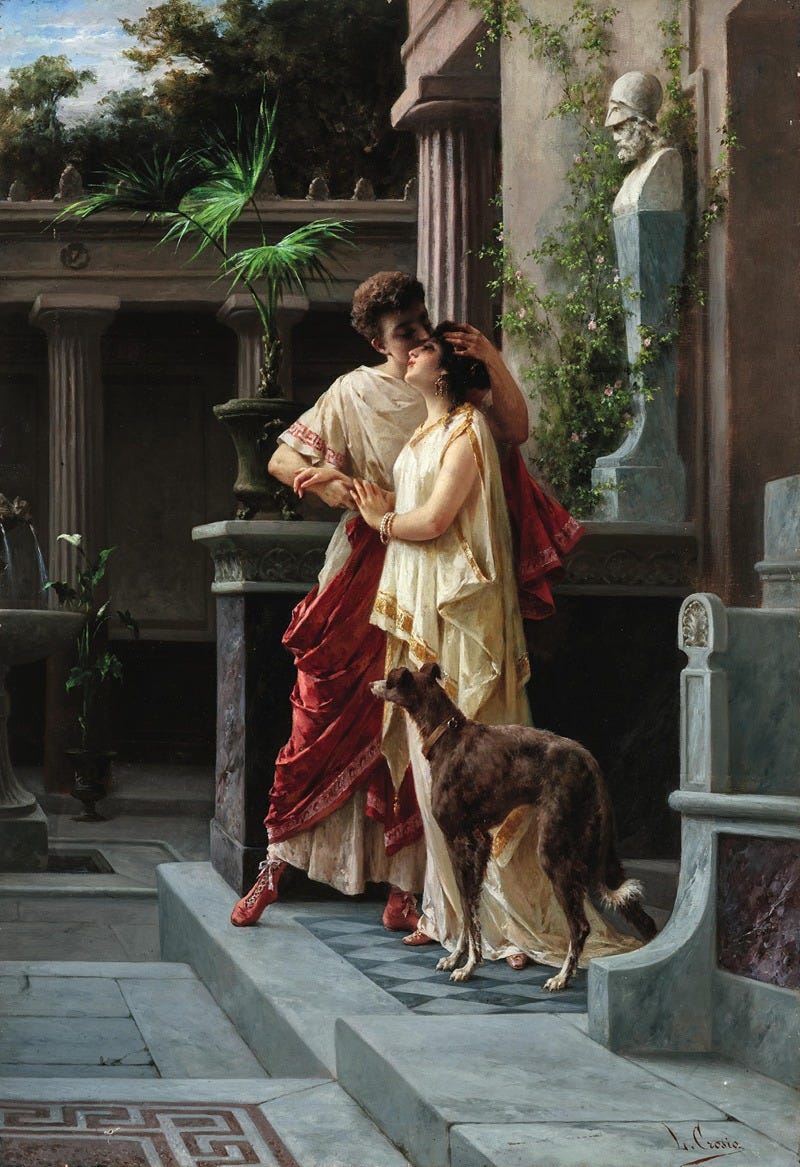
The Roman Understanding of the Family
In his De Officiis, the Roman statesman and orator Marcus Tullius Cicero wrote that “The first bond of society is marriage; next, children; then the whole family”. In this incisive observation, he effectively captured the understanding that the family was not just a private arrangement between citizens but a sacred and civic institution.
At its head of the Roman family stood the paterfamilias or father of the family. He bore responsibility for the transmission of the Mos Maiorum to those within his household which included both the particular customs of the family, but also the general tradition, religion, and civic virtue of the Roman people. It was within the family that the virtues essential to the Republic were first cultivated, and it was within the Roman household that worship itself found its earliest and most enduring form.
The pater familias also presided over the lares and penates, the household gods, ensuring that religion and piety were maintained and passed from one generation to the next. To Cicero, these were inseparable from domestic life, “For what is more sacred than the house of each man? What is more religious than the hearth of each man?”, drawing the connection between the hearth as both an altar and anchor of Roman identity.
Because the hearth was the symbolic altar of civilization, the authority of the pater familias carried both juridical and moral weight. Roman law vested him with patria potestas — the power of life and death over his household — and this sacred authority was ordered toward the preservation of Roman tradition.
The family functioned as the first school of discipline, where obedience and reverence were learned. As the Senate safeguarded the wisdom of the ancestors, the father safeguarded the customs that sustained the household. In this way, the family was the microcosm of the Roman state and ensured that civilization was not reinvented with each generation but transmitted as a living tradition from its foundations to the present.
However, in witnessing the moral disintegration of the late Republic, Cicero lamented in De Officiis that “Our houses are overturned” and “our families are destroyed.” He rightly diagnosed that the abandonment of the Mos Maiorum precipitated the collapse of domestic authority, and that this domestic breakdown soon erupted into political chaos, factionalism, and the erosion of civic virtue.
